
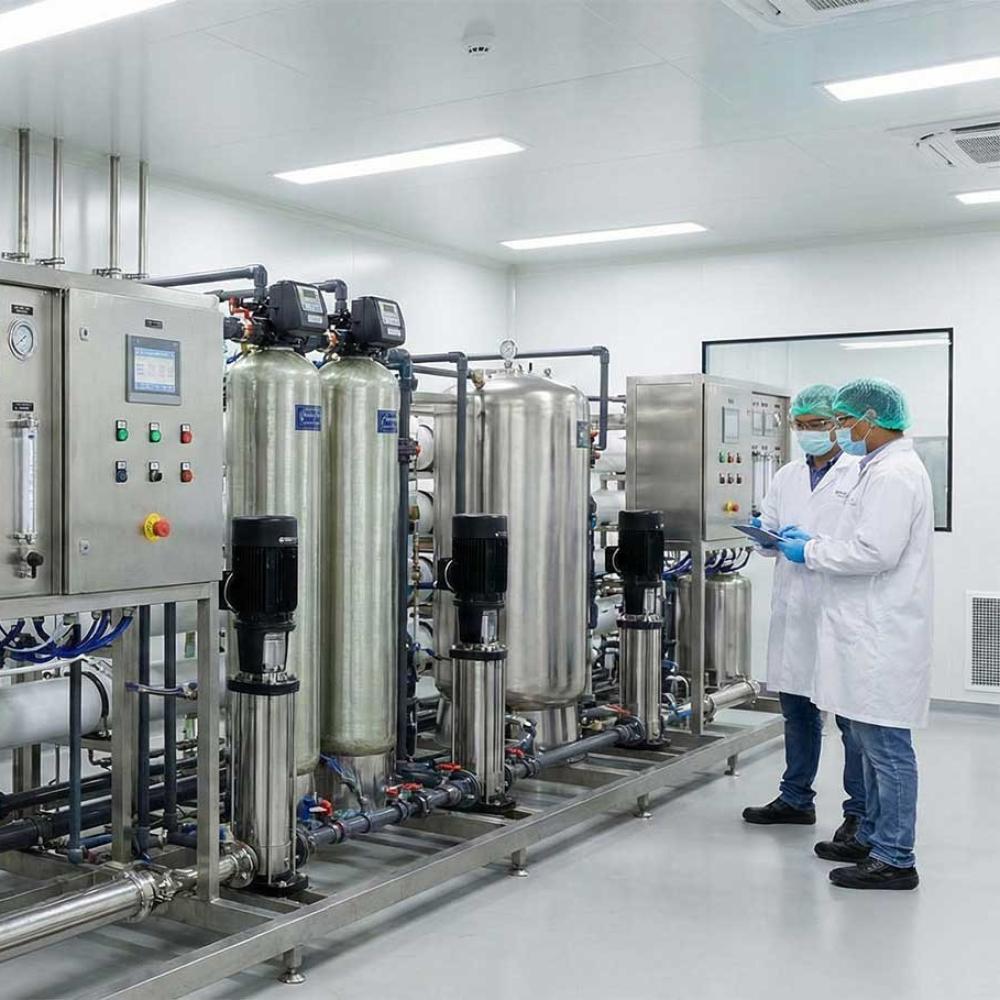
Distilled water in Saudi cosmetics factories: specifications and standards
Distilled water is one of the most essential ingredients in the skincare and haircare industry, making up between 60% and 90% of the composition of most cosmetic products such as creams, lotions, shampoos, toners, and serums. Therefore, the quality of the water used directly affects the product's stability, safety, and effectiveness .
In this article we will learn about the importance of distilled water, the difference between it and regular water, and how to read the results of water analysis to ensure that it meets professional cosmetic manufacturing standards.
What is distilled water?
Distilled water is pure water produced through a thermal distillation process, in which water is evaporated and then the steam is condensed to remove salts, minerals, bacteria, and heavy metals.
The result is highly purified water that is virtually free of chemical and microbial impurities, making it the ideal choice for the cosmetics industry.
Why is distilled water used in care products?
Using distilled water in cosmetic manufacturing is not an option, but a fundamental quality standard for the following reasons:
1. Stability of the formula
The minerals and salts present in ordinary water may react with the active ingredients or emulsifiers, leading to separation of the formulation or a change in color and odor.
2. Reduce bacterial growth
Pure water reduces the likelihood of microbial growth within the final product and improves the performance of preservatives.
3. Skin protection
Untreated water may contain chlorine or irritating minerals that cause skin sensitivity.
4. Better compatibility with raw materials
Distilled water ensures better solubility of acids, vitamins, and active ingredients such as niacinamide and hyaluronic acid.
The difference between distilled water and regular water in manufacturing
Comparing distilled water and tap water is almost impossible because tap water reacts quickly with the formula and may cause problems with the formula.
How to read a distilled water analysis report (Water Analysis)
When purchasing artificial water for cosmetic use, the following values should be carefully reviewed:
1. pH value
- Ideal range: 5.5 – 7.0
- Impact:
- High pH may harm the skin
- Low pH may affect the stability of the emulsion.
2. Electrical conductivity
- Ideal value: Less than 10 µS/cm
- It indicates the percentage of dissolved salts
- The lower the number, the purer the water.
3. Total Dissolved Solids (TDS)
- Ideal value: less than 10 ppm
- Its high level indicates the presence of undesirable salts and minerals.
4. Turbidity
- It must be less than 1 NTU
- It reflects the clarity of the water and its freedom from fine particles.
5. Microbial load (Microbial Count)
- It must be:
- Total Plate Count less than 100 CFU/ml
- Very important for products that are left on the skin (Leave-on)
What type of water is most suitable for raw material factories and warehouses?
It is recommended to use:
- Distilled Water
- Deionized Water
- RO + UV Treated Water
In professional cosmetics factories.
Important tips when storing distilled water
- Store in food-grade plastic or stainless steel containers.
- Airtight seal to prevent contamination
- Avoid exposing it to sunlight
- Use within a short period of time after opening
Why should product manufacturers choose a reliable supplier of industrial water?
Because water quality affects:
- Product validity
- Stability of the composition
- Reliability test results
- Compliance with FDA requirements
- Ultimate customer satisfaction
Therefore, it is always preferable to purchase raw materials from suppliers specializing in the field of cosmetics, such as professional raw material stores.
Summary
Pure distilled water is not just an ordinary ingredient; it's the chemical foundation of any successful cosmetic formula . Choosing high-purity water and understanding the analysis reports elevates the quality of the final product, reduces manufacturing problems, and strengthens consumer confidence in your brand.
If you work in the manufacturing of skincare or haircare products, investing in water quality is the first step towards a professional product that is competitive in the market.