
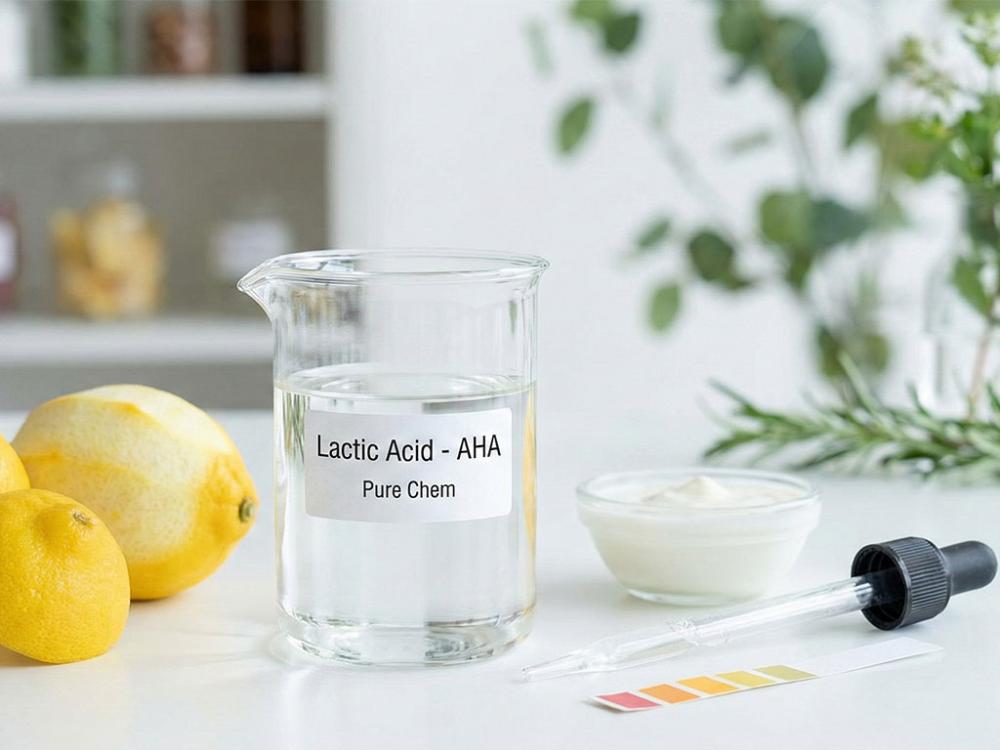
Lactic acid: The magic ingredient for skincare products
Are you looking for a potent yet gentle ingredient to enhance your skincare products? Lactic acid, a popular alpha hydroxy acid (AHA), is an excellent choice that combines effectiveness with safety. In this article, we'll delve into the world of lactic acid, exploring its benefits, applications, and how to safely incorporate it into your formulations—all from the perspective of the chemists and cosmetic manufacturers at PureChem.
What is lactic acid?
Lactic acid is a naturally occurring organic acid, often obtained in cosmetics through biotechnology-derived processes. It appears as a colorless to light yellow liquid and is completely soluble in water. Known for its relative gentleness compared to other AHAs, it is a preferred choice for a wide range of skin types, including dry and normal skin.
Why is lactic acid essential in your formulations?
Lactic acid plays two key roles in the world of cosmetic formulation:
1. pH regulation: The primary and most common function of lactic acid is its use as a pH adjuster. It helps adjust the acidity of the final product to be ideal for the skin and ensures the stability of the other ingredients.
2. Improves skin appearance: When used in appropriate proportions, lactic acid offers remarkable cosmetic benefits, helping to:
- Enhancing skin smoothness and texture: Contributes to achieving smoother and more even skin.
- Moisture support: Helps give the skin a moist and comfortable appearance.
- Gentle exfoliation: Although it is known to be gentler than other AHA acids, it still possesses exfoliating properties that help in skin cell renewal.
Applications of lactic acid in cosmetic products
Thanks to its many properties, lactic acid can be incorporated into a wide range of products, including:
- Toners and pH-adjusting products.
- Creams and lotions for face and body care.
- Products specifically designed for dry skin.
- Facial and body washes.
- Scalp care products.
It is perfectly compatible with common ingredients such as glycerin, panthenol, and niacinamide (within a suitable pH).
Your guide to formulating products with lactic acid
To ensure the best results and product safety, here are some important guidelines when handling lactic acid in your laboratory:
1. Solubility and phase: Lactic acid is added exclusively to the water phase, as it is completely soluble in water and glycols, and insoluble in oils.
2. Addition phase: It can be added either in the initial aqueous phase or in the final phase to adjust the pH.
3. Temperature: It is characterized by its thermal stability, which means that it can be added to hot or cold foods without losing its effectiveness.
4. Recommended ratios:
- As a pH regulator: 0.05% – 0.5%.
- For cosmetic benefits (in skincare products): 0.5% – 2%.
- Maximum limit (according to EU legislation): up to 10% for rinse-off products (e.g., washes), and ≤5% for leave-on products (e.g., creams), subject to safety and labeling requirements.
5. Final pH adjustment: This is a crucial step. The recommended range for the final formulation is usually between 3.5 and 6. When adding it to adjust the pH, do so gradually with continuous measurement, and it is often used as a diluted solution to facilitate control.
Storage and handling
- Storage: Store in a tightly sealed, corrosion-resistant container, in a cool, dry place away from direct light.
- Stability: It is considered a stable material under suitable storage conditions, but contact with unsuitable metals should be avoided.
Why choose Pure Chem as a source of lactic acid?
At Pure Chem , we are committed to providing high-quality raw materials that meet global standards. The lactic acid we supply is a reliable choice for cosmetic manufacturers seeking effectiveness and safety for their products.